
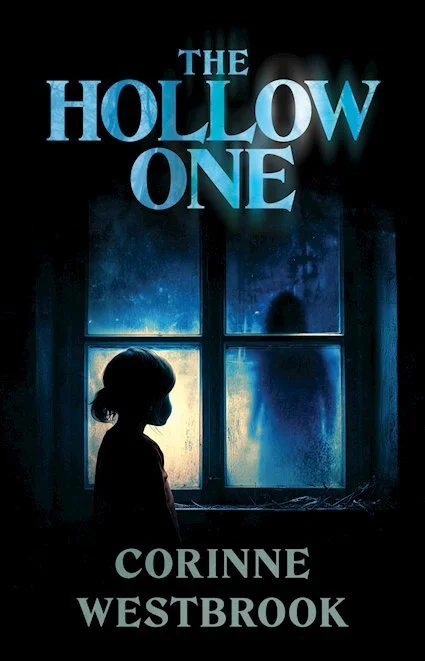
[Dicey News] Horror Debut Novel ‘The Hollow One’ Out Now: Details + My Synopsis/Thoughts.
INTRO/MY FEEDBACK ON THE HOLLOW ONE:
Read It And Weep, Nerds
(or Feel/Do Other Things - I’m Not Your Dad, Last Time I Checked):
It’s been a while since we’ve covered Tabletop-related content with any regularity - mia culpa, and you can blame the excesses of some absolutely relentless tour announcements and emails for that! Nevertheless, I’m a man with a mission, and my mission is to continue providing you guys a broad scope of content across all things ‘Riffs, Art, Hobbies and Mental Health’.
Including, but not limited to, low-effort memes, apparently.
Pictured below: A meme-ified representation regarding how I feel about my goddamned Gmail inbox and task list this week so far:
‘Neeerr, Durr-Hurr Why a BOOK, Brady?!’ - Probably No-One, 2026:
I’m going to pull rank and say ‘if it fits I sits’ - Dicey News might sound like I’m dredging the dodgiest Florida-Man behaviour from the deepest echelons of crime reporting, but it’s assuredly not! Originally intended just for Tabletop Thursdays, I’ve made the decision for this Category to encompass a wide range of hobby-related news (tabletop, wargaming, adjacent hobbies (minis-painting, terrain-building, worldbuilding, writing, literature) and even video-gaming related content, literature, comics, pop-culture. All sorts, effectively.
So yeah, no whinges about this one not being strictly tabletop - especially not when I have a Big Thing Coming later on today on our blog/socials. (Music journo can drop an Every Local Metalcore Opening Band Ever’s Capitalised Social Media Piss-Take if he likes, as a treat. Thanks for understanding.)
Literature is a mainstay of hobbies ranging from tabletop, wargaming, video gaming or, indeed, just trying to fenangle any new skill acquisition, new creative endeavour, etc. You spend a lot of time reading my literary rants, for instance.
The life of a tabletop roleplayer/game-master is also inextricably linked to that of the literary world, so why not celebrate an independent novelist breaking out from her day job into something altogether very different?
Corinne Westbrook and our team have had an ongoing working relationship through C-Squared Music, a great music-PR firm with a huge focus on promoting a lot of independent heavy/alternative music artists.
Imagine my surprise (or lack thereof - horror’s a trope for a lot of us heavy/alternative music-lovers!) to discover someone in a similar interest-orbit has gone ahead and published their first ever debut horror novel, The Hollow One.
I don’t want to give away too much in advance, especially not with such a recent release and our upcoming interview together (blast these time-zones and Zoom-fenangling, eh Curtis/Corinne?!).
Props go to Corinne, by the way: hers is the first novel I’ve actually both started and finished so far in 2026! Consider that a ringing endorsement in and of itself, considering how much even skimming an RPG-book seems to cause my smartphone/ADHD-melted 2020’s-brain great strife. The flow’s great and if I can finish it, pretty much anyone can.
So. See below for three parts: an introduction to our novelist in question, more details and background info behind The Hollow One, and finally, a little not-sure-if-a-review-really/spoiler-free synopsis on the book re: setting, tone, characters, etc.
Thanks Corinne - and congrats on your literary debut!
Keep ‘em coming, I say.
About Corinne Westbrook:
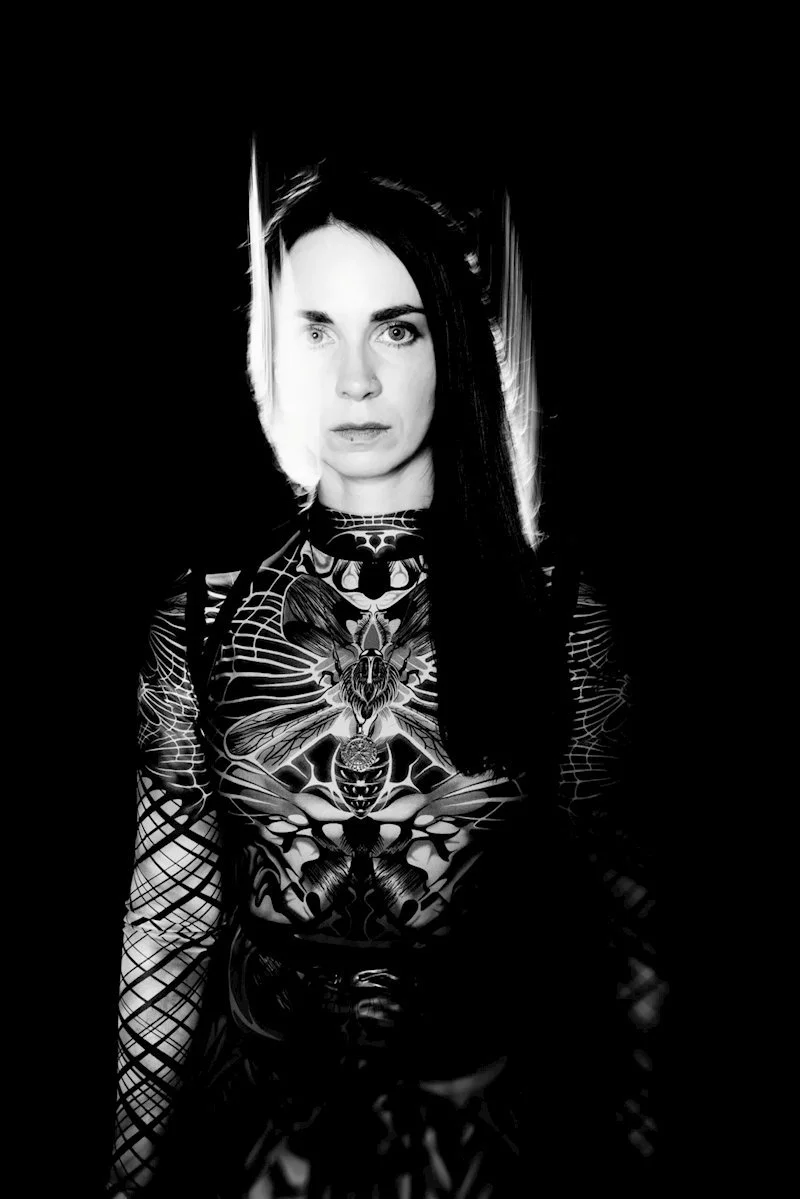
Corinne Westbrook is a writer and journalist whose work explores the darker edges of art, music, and storytelling. She has written for outlets including Metal Injection and Knotfest, covering album reviews, features, annual "Top Albums" lists, and cultural commentary rooted in the strange and unconventional.
Raised in rural Oregon, Corinne discovered her love of writing early. Her first poem was published when she was ten years old. A lifelong horror devotee, she grew up staying up late with friends to watch Tales from the Crypt, drawn to stories that blur the line between the real and the unreal.
She believes the most haunting stories often have roots in reality. While The Hollow One is a work of fiction, it is shaped by emotional truths and experiences pulled from real life. This novel is her debut in long-form fiction.
About The Hollow One:
No stranger to the dark and macabre, The Hollow One is the debut novel from writer and horror-devotee Corinne Westbrook. With a combined interest in the shadowy side of art, music and literature, Westbrook has written for metal music outlets, notably Metal Injection and Knotfest, and is well acquainted with strange and uncanny storytelling.
Set for publication on May 26th, 2026, via Permuted Press, The Hollow One is a truly bloodcurdling psychological horror. Following the days of a young girl named Ellie, amidst the struggles of an absent mother, a baby brother and poverty, something more sinister soon takes hold of her life. When one evening her estranged father knocks on her bedroom window, what seems like a comforting dream begins to turn sour as this familial figure is perhaps not so familiar after all.
Told through the eyes of a child trying to make sense of a world that’s forgotten her, The Hollow One is a literary horror story about longing, memory, and the quiet danger of being unseen. Atmospheric, intimate, and deeply unsettling, this is a ghost story where the scariest things are not what lurk in the dark, but what’s already inside the house.
Synopsis/Feedback
(Hopefully-Spoiler-Free Brady-Edition):
What To Expect, overall:
A slow-burn folk/psychological-horror novel that operates equally as a piece of literary realism — the domestic and the supernatural are weighted equally, with neither overshadowing the other entirely (NOT an easy balance to strike within the realm of horror fiction!).
Told entirely from a close child's-eye perspective, which keeps the horror intimate and immediate rather than abstract. It’s an accurate representation of the more simplistic, in-the-moment emotional states children feel, but also their relatively greater openness to novel/supernatural experiences, compared to their adult counterparts.
Paced with deliberate restraint. Now THIS is a really important point. Bringing this back to a Tabletop analogy - The Hollow One builds and tension through major plot-arcs, descriptive language etc in a way that I found really satisfying, and comparable to a really well-tuned run through Cinematic Mode in The Alien RPG. Westbrook builds dread through accumulation rather than incident - that subtle grafting and building of atmospheric tension also works really well to reiterate a childs’ interpretation of perspective, as well as the characters’ development.
Deeply grounded in the rural American setting. Without giving away too much, the folkloric feel I found largely came from the inherent assumption of ambiguity, supernaturality and dread one feels from the pervasive expanse of the forest - particularly at night, and particularly for younger humans. We’ve all had similar feelings when looking out at an endless natural backdrop. As an Australian reader used to ‘the bush’, I felt transported readily to the rural American context with ease, too. You can feel Corinne’s rural-Oregon upbringing bleed into the text in a way that feels natural and descriptive/declarative enough without having to open tabs or flick to other media for a visual yard-stick.
2. Character Arcs:
Main Character:
Again, without want of revealing too much ahead of time, both the age and experiences of the novel’s main protagonist, a six-year-old female, made this both a very interesting and at times confronting read. Ellie is a little more psychologically developed and refined than your usual six-year-old, which for me both didn’t break verisimilitude and added to my own innate paternalistic ‘must protect!’ feelings during emotionally weighted/suspenseful scenes.
Given the recent successes of young-adult/teen-focused titles in fictional media (Stranger Things, Rain, TTRPG titles such as Tales From The Loop, et cetera), I was honestly surprised at the difference having a much younger protagonist made. In truth, I was kind of sceptical at first, given sometimes authors might use earlier developmental stages as an easy means of avoiding having to flesh out further details/dialogue, etc. I didn’t feel that with this book, and I think that’s a very strong point.
There’s some degree of aptitude via the main character that may potentially veer towards immersion-breaking for some readers, but for me it reinforces the reality of growing up rural/regional - that is, you both develop AND need more awareness and maturation when growing up in environments with comparatively less social supports/structure in the immediate environment.
The Adults:
The adults in Ellie’s life I feel, again without giving away TOO much, to practice a very common unconscious mistake when looking to support children - that is, what’s lost by way of omission due to being busy, distracted, inattentive or otherwise just trying to survive.
If you haven’t grown up in a rural/regional area, the brutal honesty of the adults in this book is well-explained and described, but might feel more abrasive than what’s expected of your typical city-dwelling/suburbanite characters.
Contrasting with, say, Stranger Things - there isn’t as much of the eye-roll/here-we-go-again ‘gruff cop to loving stepfather’ arc as we see with Eleven (Ellie! Huh). There’s ample room made for emotional development and growth in this novel, but I was refreshed to watch things unfold with the fairly realistic notion that we, especially as adults, are often leopards who still bear our spots. That’s all I’ll say on the matter - any further just risks going into the spoiler-zone.
So yeah. Ultimately, it’s a pretty realistic appraisal of how folks out there in them parts (imagine that with a stick of grass hanging out the side of my mouth) would respond to an increasingly surreal situation, particularly given our dismissal of childrens’ concerns as facets of an over-active imagination. Don’t expect Deliverance, but also don’t expect our usual modern-media parental coddling of younger characters, either.
The Antagonist:
Easily the most challenging part of the novel, for me. Whilst it doesn’t venture into NSFW/NSFL territory (NSFL = Not Safe For Life - save THAT for my Bonus Episode on AI chatbots, Patreon Members… content-warning in advance)….there’s a disquieting feeling of coercion and attempting to win favour, groom emotionally, etc. The fact it isn’t in a sexualised fashion is a relief, but the antagonist is also prone to being disconcertingly logical and straightforward in its’ methodology/communication.
(As an auDHD (autistic/ADHD) person, I also felt some form of sympathetic tug about the hostile interpretation of some of its’ attempts to simply use clear behaviour/language/call a spade a spade, et cetera. Not an overt intent of the novel, but just a reflection on reading, especially when the antagonist acts in a logically-consistent manner. And yes, being an antagonist means ‘some’ sympathy. You’ll find out why some of that is reserved…).
It’s very, VERY easy to cross into demarcations that are unsafe ground for victim-survivors and those with past trauma history when dealing with topics like young persons (particularly female children) and external influences versus familial relationships.
Whilst I’d obviously say anyone looking into reading a horror novel with a young girl as a protagonist to practice some caution and safety in advance - at least from my reads of the novel, I didn’t have any concerns enough with how the antagonists’ relationship manifests with the other chars to slap mental-health-clinician-coded warnings on that. Take into account as well, mid-thirties/white/cis-het dude saying that, too.
Lastly on this point - the focus on an antagonist who interacts often with a child as main protagonist also really added a classic Stephen King air to the novel. Think classics like Pet Sematary and IT, but without the latters’ erm… problematic-in-2026-but-really-always-was-bad final novel arc (let’s not even go there with that one, huh?).
3. Prose/Flavour:
Westbrook rights in a style that I’d say carries elements of, say, Hemingway or Bukowski. That is, and thankfully unlike my waffling labyrinthine style, more declarative and punch phrasing. There’s plenty of descriptive flair, it’s just not embellished over multiple paragraphs. Helps the pacing, but also adds to a sense of urgency in key moments - you’ll have to read the book to find out which!
The way in which the supernatural/otherworldly is introduced is honestly one of my favourite elements of this novel. For instance, when doing a MSE (Mental Status Exam) on someone experiencing ‘prodromal’ (precursor/early warning signs) symptoms of psychosis, folks often report this encroaching, enveloping sense of global unease, sensory ‘wrongness’ and too much brightness/contrast/dulling of perception at weird, wonky but progressively worsening intervals. It’s referred to clinically as delusional atmosphere, and you could very much align the tone of this book much the same. Filtering that through a childs’ lens also amplifies the dread and horror-factor for the reader.
Verisimilitude for child-as-protagonist I thought was really well-maintained by how much emotions were couched in bodily sensations, vague markers of anxiety, irritation, shame, etc. Kids often don’t have the refinement of education and language to help verbalise complex emotions, and this is conveyed nicely both through Ellie’s dialogue and the overall emotional tenor of the book.
Structure - The titling of the chapters similarly weaponises both punctuality, unease and mounting tension. Normally it’s not even something I think about, honestly, when reading a novel. Punctuating the book, the chapter titles themselves serve as their own little additive method of building tension.
Socioeconomics - As someone who grew up himself in a single-parent/welfare-dependent household, Corrine did a fantastic job of scaffolding the actual sociological ‘horror’ of poverty/deprivation, institutional disadvantage/neglect, marginalisation etc, around a main-character both blissfully unaware and clocking the households’ financial impacts. The social realism helps a lot, honestly, to keep the novel tethered to a spectrum of human challenges and fears, not just things that go bump in the night.
Recommended If You Like:
Shirley Jackson - The Haunting of Hill House
Neil Gaiman - Coraline
Thomas Tryon - Various Works
Victor LaVelle - Changeling
Whilst I haven’t read the title, doing a sweep for similar literature - I’d say Emma Donoghue’s Room seems very similar tone/character wise.
Read the book and correct me if I’m wrong!
No, seriously - go read it, it’s great.
inner-strength check - links:
Check out the brand new Inner-Strength Check Patreon!
For just $5AUD/month, as a Riff Nerd you’ll gain access to bonus exclusive podcast episodes, have a say in shaping future content, have opportunities to receive giveaways and prizes, gain access to Members-only articles and more!
Thanks to all who’ve helped support us to remain independent and ad-free, cover operational costs and continue supporting numerous creative industries, artists and their communities.
Peace, Love and Grindcore - Brady & The ISC Team.